Your ability to dive deep and solve a problem all the way through independently is highly correlated to your ability to successfully set direction as a C-suite leader.
C-suite leaders should reserve 5% of their time for consequential problems that nobody else in the organization currently owns and also won't be surfaced to the broader organization in less than a year. While our organizations deliver against daily commitments, monthly priorities, and quarterly results, we need to consider what the business may face one to five years from now and personally begin working through some of those questions. By the time the organization is ready to take them on, we should have practical knowledge of what it will take to succeed, from the initial problem through implementation to a measurable result.
Making room for that work requires a deliberate choice, because the current business presents problems with clearer owners and more immediate consequences. A missed forecast belongs in the operating review, while a change that could undermine the business model in three years may have neither an owner nor a deadline. James March's work on organizational learning describes how established activities can crowd out exploration, giving us reason to protect time for questions the current plan leaves unanswered.
When every problem reaches us with its framing established, evidence selected, and alternatives narrowed, we get fewer opportunities to practice the discovery and reasoning our own judgment depends on. We can remain busy evaluating recommendations while becoming less familiar with the false starts and implementation failures that shaped them, leaving a growing distance between our authority to approve a proposal and our ability to work through one ourselves.
The discipline we apply to physical conditioning is useful here, because the thinking skills we depend on also need regular use. Research on skill retention finds that trained capabilities can deteriorate through nonuse, which reinforces my concern that C-suite leaders can become less practiced at the reasoning their responsibilities still demand. We should preserve opportunities to work through unfamiliar problems and learn from the results, so our confidence stays connected to capabilities we continue to exercise.
For me, that means personally working through a manageable version of a problem from defining the outcome through implementing a solution and measuring its results. As assumptions fail and practical complications emerge, we should do the reasoning required to resolve them, drawing on specialists where their expertise is needed. The work should continue far enough to establish whether the solution achieved its purpose and explain any gap between completing the project and producing a successful outcome.
Our ability to set strategic direction that will work depends in part on this understanding, since a compelling market opportunity can rest on a delivery model with unsustainable economics. We may also find that a proposed growth strategy relies on capabilities we cannot develop in time, leaving us with commitments the organization has no practical way to fulfill. Discovering those constraints early should change the direction we choose or the sequence of investment, improving our basis for deciding what the business is ready to pursue.
That is also why we should retain personal responsibility for some critical decisions, even as we give capable leaders meaningful authority throughout the business. When committing capital, we should understand how the investment creates a capability, how that capability reaches the customer, and how adoption produces an economic return. Following that sequence closely enough to recognize where it could fail allows us to bring informed judgment to decisions for which we remain accountable.
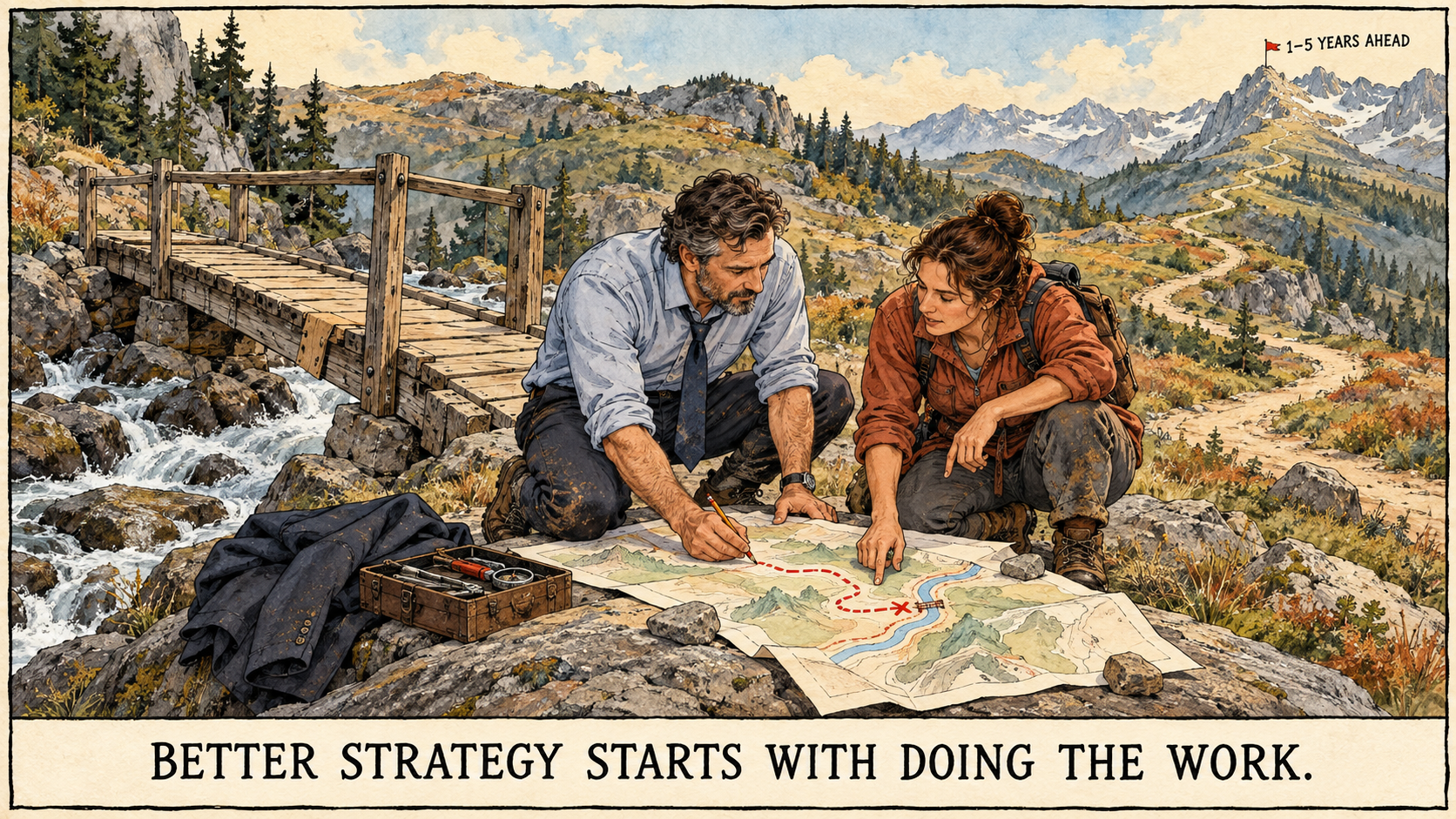
Useful candidates for our own work will often cross existing responsibilities or sit beyond the current planning cycle, although we should establish why they have no owner before taking them on. Earlier investigations may have uncovered good reasons to stop, or an organization may already be pursuing a related opportunity. Our involvement should address a consequential gap while preserving the ownership of people already equipped and authorized to lead.
Consider a hypothetical software company whose organizations are improving onboarding and retention while an executive explores whether customers might eventually prefer buying a completed business outcome to buying software access. Taking one narrow customer workflow through the offer, pricing, data requirements, delivery, quality checks, and ongoing support would reveal questions that a market assessment alone cannot answer. The executive could work through an initial delivery with specialists to learn whether the customer receives the promised benefit at a viable margin.
A polished demonstration might conceal manual work that makes delivery too expensive or exceptions the proposed process cannot handle, and those failures should become part of the executive's own problem-solving work. Understanding how a fix changes the customer experience, operating requirements, and economics is what makes the eventual recommendation useful.
For that understanding to guide the organization's next steps, it needs to reflect the conditions employees would face. We should work within comparable budgets, staffing, systems, approval requirements, and competing commitments, recognizing that special access or exceptions granted because of our title can produce results the organization cannot repeat. When the work exposes an unnecessary constraint, we can use our authority to remove it for the people who will deliver the solution and reassess what those changed conditions make possible.
Working under those conditions also gives us a more credible basis for setting expectations with frontline employees, who should recognize their working reality in our plans. Having dealt with missing data or a difficult handoff, we can make more informed judgments about effort and deadlines and explain how those details affected our decisions. The experience may also reveal that a delivery problem requires a change in leadership decisions or resources before we ask the organization to improve execution.
When an opportunity may take years to develop, we need shorter cycles of testing and learning to expose weaknesses in our reasoning while we can still act on them. Kahneman and Klein's work on expert intuition helps explain why: reliable intuition depends on sufficiently predictable patterns and useful feedback, while confidence by itself gives us little assurance of accuracy. Completing smaller efforts and reviewing their results gives us evidence about specific assumptions as the opportunity develops, although a successful pilot still leaves much of the wider business case unproven.
To make those results useful, we should record our assumptions and measures of success before starting, then review the outcomes with someone prepared to challenge us. An agreed scope and clear limits on time and support will help keep our involvement proportionate to the company's operating needs. Deciding when to stop or transfer ownership also gives us a way to judge whether our continued participation is still helping.
When the organization is ready, it should receive an account of how the solution works, what happened when we tried it, and what remains unproven at scale, with customer evidence connected to the operating dependencies and economics. The receiving organization should have the freedom to challenge our conclusions as it builds on them. By doing the work early and under conditions the organization can recognize, we give it a better starting point while keeping our own judgment grounded in problems we are still learning to solve.